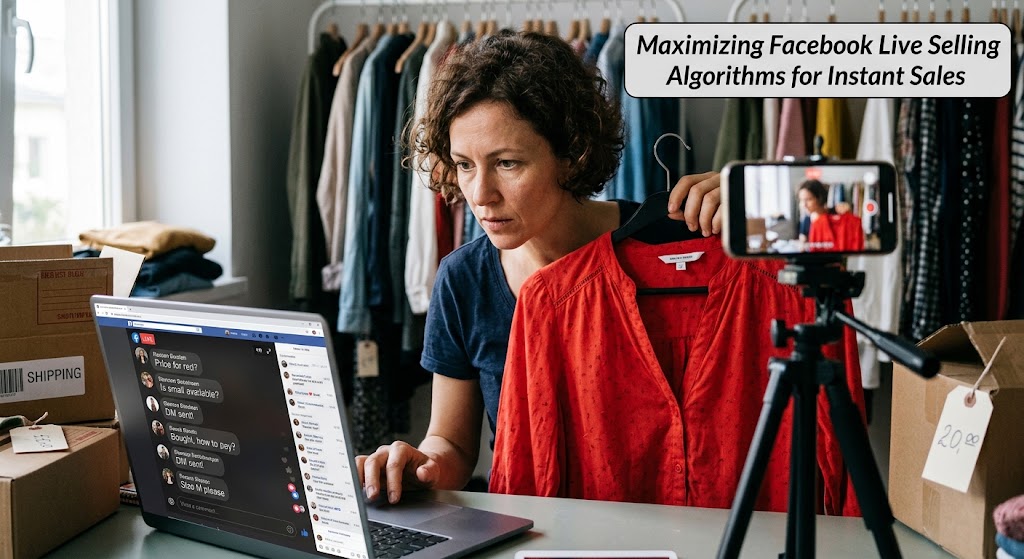
When comments start flying faster than you can read them, the adrenaline is real. But when your internet begins choking, orders disappear into the scrolling chaos. facebook live selling works best when you treat those comments as more than noise. They can become buying signals, conversation starters, and a practical way to keep viewers involved without relying entirely on paid marketplace traffic.
The important catch is that Facebook does not simply reward a stream because it has thousands of comments. Meta has specifically said it is reducing the distribution of coordinated fake engagement while trying to elevate meaningful discussions.
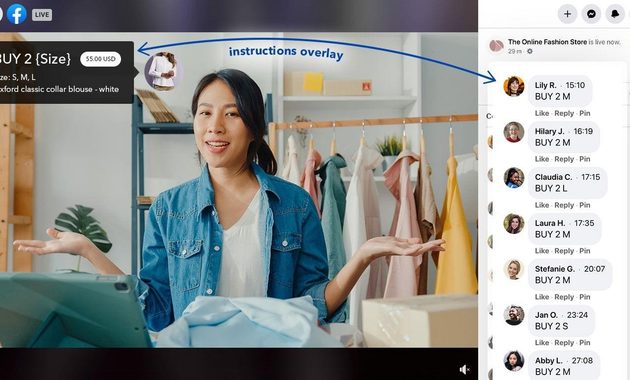
1. Facebook Live Selling Works Better When Stream Comment Triggers Create Genuine Buying Conversations
The easiest mistake is telling viewers to comment something meaningless just to inflate activity. That can look like engagement bait rather than useful interaction.
Turn Product Questions Into Comment Opportunities
Instead of:
“Comment YES if you want this!”
Try questions that naturally help people make a purchase:
- “Which color should I try next, black or cream?”
- “Who needs size XL?”
- “Want to see this dress from the back?”
- “Should I show the cheaper version next?”
These questions produce comments that actually relate to the product.
Meta says it is actively targeting spammy behavior and coordinated fake engagement, while emphasizing meaningful engagement and original content.
Scarcity Works Because The Product Is Actually Limited
Scarcity can be powerful in live commerce, but only when it is genuine.
“Only 5 left in size M” gives viewers a reason to decide now.
“Only 5 left” when you secretly have 500 is simply dishonest.
A good live seller can create urgency through:
- Limited stock.
- Limited-time pricing.
- A short bundle offer.
- A genuine first-buyer bonus.
That creates a reason to participate without manufacturing fake engagement.
The Pearl Party Story Still Explains Why Live Commerce Works
One of the best-known Facebook Live commerce examples came from “pearl parties,” where hosts opened oysters on camera to reveal pearls that viewers could buy. WIRED documented how sellers turned the format into entertainment, suspense, and commerce at the same time.
That is the real lesson.
People were not watching simply because pearls were available. They were watching because something was happening right now.
2. Live Auction Algorithm Tactics Need A Better Comment Mining System
There is no official Meta formula saying “X comments equals Y reach.” Be suspicious of anyone selling that certainty.
Instead, think of the live auction algorithm as an environment where meaningful viewer activity, retention, reactions and conversations can support a stronger live experience. The safer strategy is to engineer useful interactions rather than chase an arbitrary comment count.
Build A Simple Comment Code
For example:
A01 = Red blouse
A02 = Cream blouse
A03 = Black blouse
Then tell viewers:
“Comment A02 + M if you want the cream blouse in size M.”
Now the comment does three jobs:
- Identifies the product.
- Identifies the buyer’s choice.
- Gives your order system something structured to capture.
Modern live-commerce tools can monitor Facebook comments and automatically create orders when comments match predefined product keywords. BigSeller, for example, documents keyword-based order capture, stock checks and purchase limits inside its Live Dashboard.
Automate The Boring Part, Not The Selling
Third-party systems can help capture comments, match product codes, track stock and organize orders.
That does not mean your host should become a robot.
Let software handle:
- Order capture.
- Duplicate checks.
- Stock limits.
- Order lists.
- Comment monitoring.
Keep the human host responsible for:
- Demonstrating products.
- Answering unusual questions.
- Building urgency.
- Negotiating bundles.
- Making viewers feel noticed.
That division is much more practical than trying to automate the personality out of the broadcast.
3. Broadcasting Sales Setup And Organic Reach Hacks Should Protect The Buying Experience
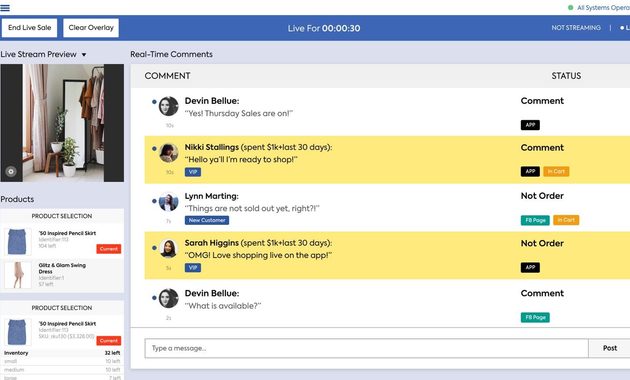
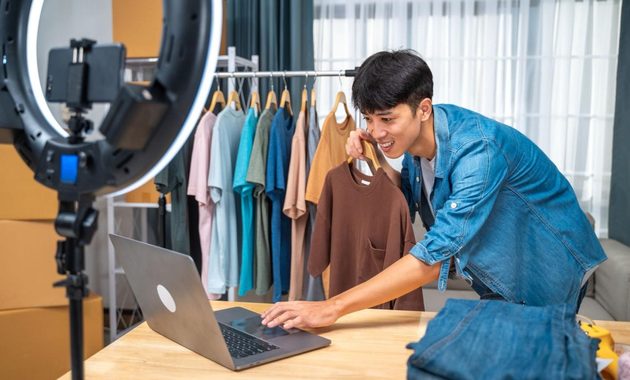
A clever selling script is useless if viewers cannot hear you, see the product clearly, or understand how to order.
Keep The Broadcasting Sales Setup Simple
You do not need a television studio.
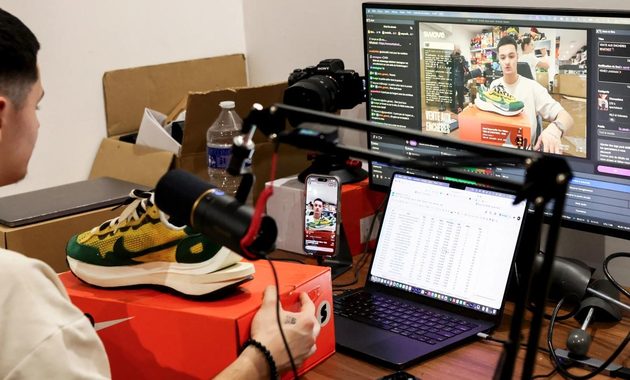
A practical setup can be:
- Smartphone or camera.
- Stable Ethernet or strong Wi-Fi.
- External microphone.
- Basic lighting.
- Laptop for comments and order management.
- OBS when you need scenes, overlays or multiple sources.
The key is visibility. Product name, price, size, color and ordering code should be easy to understand without forcing viewers to ask the same question repeatedly.
Repeat Product Information Without Sounding Robotic
People join live streams continuously. Someone entering 25 minutes after you introduced “A02” has no idea what A02 means.
Repeat important information naturally every few minutes:
“For everyone just joining, this is A02, cream blouse, sizes M through XL, and the live price is $18.”
That repetition is not wasted airtime. It reduces friction.
Organic Reach Hacks Should Never Mean Fake Engagement
This is where many “algorithm hacks” go wrong.
Meta has explicitly said fake coordinated engagement can receive reduced visibility.
Better organic tactics are:
- Bring an existing audience before going live.
- Start with the strongest product rather than a long introduction.
- Answer early comments quickly.
- Demonstrate products instead of merely describing them.
- Ask questions that affect the broadcast.
- Encourage genuine sharing when viewers actually know someone who would want the product.
That approach is much more sustainable than buying comments or creating fake conversations.
For sellers who want to preserve their broadcasts for later clips, this guide on downloading a Facebook Live video is also useful after the selling session ends.
The Real Metric Is Not Just Comment Count
Track what happens after the comment.
A better post-stream review asks:
- Which product generated the most questions?
- Which product generated the most orders?
- At what point did viewers start leaving?
- Which offer caused people to return to the comments?
- How many comments became actual purchases?
That turns facebook live selling from “going live and hoping” into a repeatable sales system.
Q&A
Does Facebook Live automatically boost a stream because it receives many comments?
No guaranteed comment threshold exists. Meaningful interaction is more useful than manufacturing comment volume, and Meta actively works against coordinated fake engagement.
Can Facebook Live still be used for selling without native checkout?
Yes. Facebook Live can still function as a selling channel, with comments, messages, external storefronts and third-party commerce systems handling the transaction workflow. Some platforms can even trigger order capture from specific Facebook comment keywords.
Is scarcity always the best tactic for live selling?
No. Scarcity works when the limitation is real. If every product is supposedly “almost sold out,” viewers eventually stop believing the urgency. Demonstration, trust, useful answers and genuinely attractive offers are stronger long-term sales drivers.

Maeve Kelleher spent eight years working in boutique social media agencies, where she developed livestream campaigns for independent retailers, musicians, nonprofit organizations, and lifestyle brands. She has planned live launches, interviews, demonstrations, fundraising events, and audience question sessions. Her writing focuses on realistic social livestream strategies rather than empty promises about instant reach or overnight growth.